How Many Spots On Roulette Wheel
- The difference in these two wheels arises because of the numbers on a roulette wheel. While the American Roulette wheel has 38 slots, the European Roulette has 37 slots. This difference is further attributed to the 00 present in the American Roulette wheel. Consequently, the American Roulette has a higher house edge than the European roulette.
- The French roulette wheel is a contrasting theme of reds and blacks, broken by a single green slot. There are 37 numbered compartments from 0 to 36, though no ordered numerical sequence is adopted, there is a correlation between the color and whether a number is odd or even.
- Roulette Supplies Roulette Layouts, Wheels, Sets, Checks, Tables & More! Choose from our complete line of Roulette Supplies, including Markers, Felt and Billiard Cloth Layouts, Wooden and ABS Roulette Wheels, Stationary and Folding Roulette Tables, and much more. We have offered casino and gaming supplies since 1976 - your satisfaction is.
Roulette is one of the most popular table games in modern casinos. Although variations on the game have been around for several hundred years, there are now only 3 variations in American casinos.
Nov 07, 2016 Roulette Wheel. (Source: Wikimedia.org) Did you know that all the numbers on a roulette wheel (1 to 36), when added together make 666, the Number of the Beast according to the Book of Revelation? There are a total of 38 pockets on the American roulette wheel, ranging from 0 to 36, plus the additional 00 number. 18 of these pockets are red, the other 18 are black while the two slots featuring 0 and 00 are green.
You’re likely already familiar with American roulette and European roulette. The most recent addition to the table game inventory is Sands Roulette.
Which of these games should you play?
How should you bet on them?
What’s the smartest strategy for roulette betting?
I’ll explain all that in this post:
What Are the Differences between American, European, and Sands Roulette?
Although these games have a few other differences, the most significant distinction between the 3 versions of roulette are the number of green slots the wheels contain.
Every roulette wheel has at least 37 slots.
36 of those slots are always numbered 1 to 36, and they’re alternately colored RED or BLACK.
The additional slots are green.
In European roulette there is only one green slot, the “0”.
In American roulette there are two green slots: “0” and “00”.
In Sands roulette a third green slot, “S”, has been added to the wheel.
The green slots are there for one reason:
They make the game’s statistical probabilities uneven.
This is because of the way roulette bets are paid off. You can win anywhere from 35-to-1 (for betting on a single number) down to 1-to-1 (for betting on 18 slots at a time).
The payoffs, called “odds”, are not as fair to you as the actual estimated probabilities of the roulette ball landing on any given slot. This is how the casino makes its money.
In a game of roulette the house should keep at least 2.70% of all the bets players make over time. The casino has no need to cheat the players. In fact, the players often make really bad bets that improve the “house edge”, as that casino profit is called.
One of the other differences between European roulette and both American and Sands roulette is that the European roulette table has an additional betting area. This secondary betting area is used to place specially designed bets. They are more complicated than the normal bets made in American and Sands roulette. I’m going to ignore this section of the table, because I’m going to show you how to place bets that have the best chances of paying off.
Is There a Winning System for Roulette?
Everyone who gets into roulette sooner or later starts to think about how they can “beat the system”.
I’m going to be honest here:
There is no way to do that.
The green slots on the wheel make it impossible for anyone, anywhere, to ever design a betting system that is guaranteed to win. If you really want to guarantee yourself a win every time, then put a chip on each of the 2-to-1 outside bets and on each of the green number bets.
That’s the only way you’ll be paid money every time the wheel spins.
You’ll also go broke.
You may have heard about a system called the Martingale System. It’s a popular betting system with new roulette players.
Experienced roulette players just turn their heads and roll their eyes when someone mentions the Martingale System. The only way you can make money with the Martingale System is to write a book about it and get people to buy your book.
Even that’s a gamble, though, because most people now know that the Martingale System promises more than it delivers.
Here’s how this system works:
You start out betting the minimum. If you lose, you double your bet. If you win on your doubled bet, you go back to betting the table minimum. If you lose again, you double the size of your bet again.
This sounds great to inexperienced bettors but the problem is that you’ll either run out of money or hit the table limit before you can recoup your losses as they add up.
The Martingale System is a sucker bet, plain and simple.
Every betting system in every form of gambling tries to leverage probability theory. The Martingale System and other roulette betting strategies also rely on probability estimates.
But there’s a flaw in the thinking behind these systems. If you account for the flaw you’ll be okay. You won’t always win but your expectations will be more reasonable.
The secret to not going broke when you gamble is to set reasonable expectations and maintain your self-discipline. You should never drink or take drugs when you gamble. They lower your inhibitions and impair your judgment.
You might as well just hand your money over to the casino at the cashier window and say “keep it” if you’re going to drink or do drugs when you gamble.
How Do Probabilities Work in Roulette?
Probability theory came out of statistics. It tries to give us rules by which to guess what happens next in any situation. The guesses are seldom accurate predictions. Sometimes the guesses work out, and sometimes they don’t. Gamblers love probability theory because they think it helps them pick the best betting strategies.
You’re actually more likely to double your money during a roulette session if you put all your money on a single bet. The more bets you place, the less likely it becomes to double your money.
That’s because every bet brings you close to the long term expectations. The closer you are to the short term, the more likely you are to get better than expected results.
In roulette, the probabilities are simple. The dealer spins the wheel and releases a ball that whirls around the outside of the wheel and finally settles in a slot. With only 37 slots on a European roulette wheel you have a 1-in-37 probability of the ball landing on a specific slot.
This probability never changes.
This probability is calculated on the basis of all the known possibilities.
What probability theory cannot do, however, is predict where the ball will stop.
Nor can it predict whether the ball will land on red, black, or green any number of times over the next 100 spins.
Nonetheless, a lot of gambling guides tell you that you have the best chances of winning if you do this because of such-and-such probabilities. And many of these guides warn you that there is no way to predict the future, but by setting the expectation that the ball will land on red about 47% of the time, these guides are making predictions and promises they cannot keep.
They’ll even back up their claims by talking about how to run computer simulations for 1 million spins of the wheel so that you see how often the ball lands on red, black, or green.
In the real world the Probability Fairy is always on vacation. She’ll never be there to wave her magic wand to make things happen the way experts say they should. The ball could land on red over the next 20 spins. Or it could land on black or green or some random mix of color combinations.
You have no way of knowing how many of the next [X] spins will turn out a certain way. Talking about probabilities in this way is just dishonest.
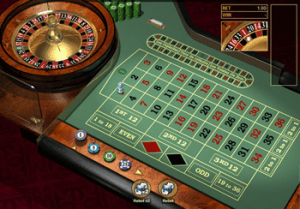
What you can do is look at the wheel and ask yourself how much it costs to bet on the largest possible set of numbers. The idea here is to get as much coverage as you can without losing money too fast.
But even if you cover every number on the wheel you’ll lose money.
So the only way to win in roulette–and this is completely random, never guaranteed–is to bet on less than all the numbers on the wheel.
You also want to play bets that pay better than even money. You can place a variety of bets, but most of them aren’t worthwhile.
Betting on single numbers is a bad idea. You can place bets on the lines between the numbers (these are called “street bets”) and on lines at the corners of numbers (these are called “corner bets”).
But even though you get pretty good odds (payoff) you’re still covering too few numbers.
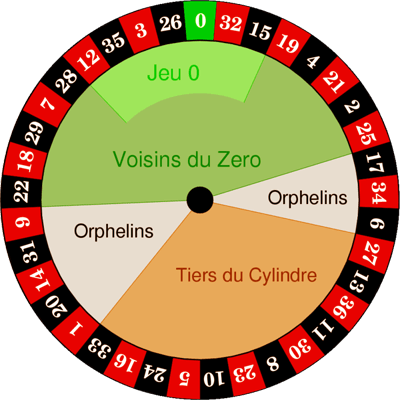
How Bets Work in Roulette
Divide the bets into two groups:
- Inside bets
- Outside bets
Inside bets are based on individual numbers or small groups of numbers. When you see players betting on the lines, corners, and individual numbers on the table they are making inside bets.
Outside bets are based on pre-selected groups of numbers on the wheel. The “2-to-1” bets cover 12 numbers each: 1 to 12, 13 to 24, and 25 to 36. The “1-to-1” or “even money” bets cover 18 numbers each:
- Odd
- Even
- Black
- Red
- 1 to 18
- 19 to 36
The bets more likely to pay are the even money bets.
But unless you can win 5 times out of 9 on even money bets you’ll lose your stake. That’s the problem with roulette. You always have to win at least 1 more time than you lose no matter how you place your bets.
The “2 to 1” bets pay better than the “1 to 1” bets because they cover fewer numbers. You have less of a chance of winning.
There are 6 types of “2 to 1” bets:
- 3 kinds of dozens bets: (1 to 12, 13 to 24, and 25 to 36)
- 3 kinds of columns bets: ([1, 4, 7, 10, 13, 16, 19, 22, 25, 28, 31, 34], [2, 5, 8, 11, 14, 17, 20, 23, 26, 29, 32, 35], [3, 6, 9, 12, 15, 18, 21, 24, 27, 30, 33, 36]).
You can make a bet by betting on any two of the “2 to 1” groups. That means that instead of covering only 18 numbers you’ll be covering 24 numbers.
This type of bet is often called the “double dozen” bet. It’s popular among gamblers who like to hedge their bets. They have a better chance (all other things considered) of scoring a win with a “double dozen” than with one of the standard even money bets. If you’re playing it safe and going for even money odds, you should always play a double dozen bet.
If you want to bet more aggressively, then instead of betting more money on your double dozen, you can cover all 36 of the red and black numbers. Leave the green numbers alone. Yes, they’ll come in every now and then, and you’ll lose money.
How Many Green Spots On A Roulette Wheel
But there’s a way to keep your losses low.
How to Bet on Columns or Dozens Aggressively
Take 6 chips and distribute them across EITHER the three dozen bets or the three column bets.
Place 3 chips on 1, 2 chips on the 2nd, and 1 chip on the 3rd. If the ball lands on a green number you’ll lose your entire bet, so always play the table minimum with this aggressive style.
If the ball lands on any number with your single chip bet, you’ll win 2 chips and lose 5–for a net loss of 3 chips (half your bet).
That’s the safest way to bet aggressively on the table.
If the ball lands on any number in your 2 chip bet you’ll win 4 chips and lose 4 for no loss. This keeps you in the game.
If the ball lands on any number in your 3chip bet, you’ll win 6 chips and lose 3 for a net gain of 3 chips. This will offset 1 single chip win.
The way this betting strategy works out, your money can grow substantially and still take some big hits. Where the strategy will fail you is when the ball lands on green or if the ball lands on the single chip bet more often than it lands on the 3 chip bet.
Sorry, but there’s no way to prevent that from happening.
There Is No Guaranteed Way to Win in Roulette
I can’t say this often enough:
You can’t win at roulette in the long run.
I think roulette is a fun game to play. It’s exciting because you don’t know where the ball will land. You take an active role in making your wagers.
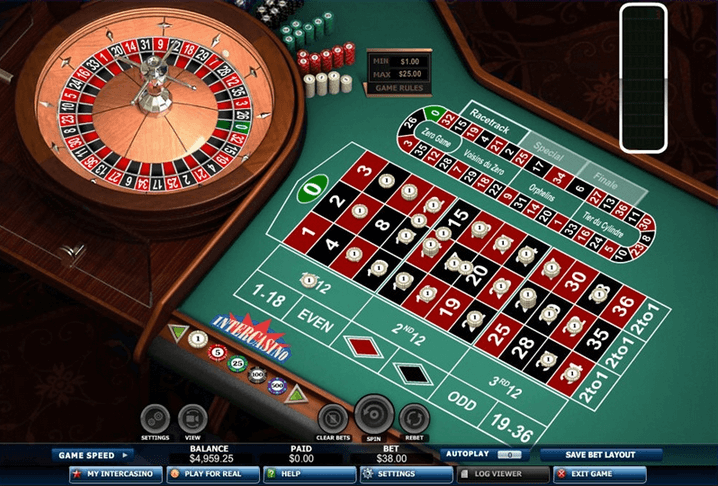
And you’ll find there are a lot of different betting systems to experiment with. The only thing that is guaranteed in roulette is that the casino will make a profit. What you hope for is that they make their profit at someone else’s expense.
Players who try to improve their luck by making big bets do sometimes win, but most often the people who come out ahead are the patient players who use conservative betting strategies and take money off the table. If you only walk away with your beginning stake you’ll be luckier than most gamblers.
And you can take that to the bank.
How To Play The Roulette Wheel
| 1 | Trada | Visit |
| 2 | Casumo | Visit |
| 3 | Genesis | Visit |
| 4 | Leo Vegas | Visit |
| 5 | Party Casino | Visit |
According to the history the first roulette wheel as gambling device was invented by chance by Blaise Pascal when he was trying to create a perpetual motion machine. As time went by the wheel has been modified to become the wheel we know today.
The roulette wheel game is sometimes believed to be derived from Italian Hoca game and English E-O game. Both games used a rotating wheel with special marks for players' bets and those which won bets for the casino. Obviously, E-O was the first wheel game with bets on Even and Odd which are still used in the modern roulette games.
Roulette Wheel Construction
The construction of any roulette wheel is easy to understand. It is a specially designed rotating wheel that is settled on the roulette table. The numbers from 1 to 36 alternate between small and big, black and red, even and odd. The wheel also has an extra slot of 0 and 00 (00 only in American roulette). The wheel has special pockets close to the numbers where the ball lands randomly. Let's take a look at the construction of the traditional roulette wheel and all its components:
The roulette wheel itself consists of two basic parts which are a static bowl and a wheelhead which rotates in the bowl. The bowl is produced of solid wood with plastic elements or plastic coverings. The bowl assembly includes the ball track, the lower ball track apron with the special ball deflectors and a spindle for supporting the rotating wheelhead.
The roulette wheelhead is settled into the bowl in such a way that it fits with the upper and lower ball tracks. The outer edge of the wheelhead contains the colored numbers and pockets for roulette ball to land on. The central part of the wheelhead which has a conical shape is called the cone and it is used to direct the ball into the pockets. A turret is a decorative component which hides the height adjuster. In order to prevent any malfunction or defect the roulette wheel is carefully checked and tested before it is used in a casino.
American and European Roulette Wheel
The basic difference between roulette wheels used at European and American-style games is the sequence of numbers which is traditional and does not influence the game results:
The wheel is designed to place all the red and black, even and odd, small and big numbers equally. The design is standard in every casino. The dealer rotates the wheel in one direction and rolls the ivory ball in the opposite direction. The ball eventually starts to slow down until it lands on one of the pockets in the wheel.
Roulette Ball
The first roulette ball was traditionally made of ivory bone, but today it is produced of nylon, acetal or phenolic. The material influences the bounce of the ball and that is quite important for roulette players. For example, the nylon roulette ball is very bouncy, while the ones made of acetal are less lively. If the ball quickly thuds into the roulette pocket it is probably produced of phelonic. Based on this information, the players can determine which game will be beneficial for ball landing.
According to most gambling laws, the roulette ball must have a 12/16-inch diameter. In fact, all the roulette balls never go over these parameters which are considered to be the most appropriate. It provides the optimal speed of rotating and landing into the roulette pockets.
Those players who use a prediction method in the roulette game will agree that the ball track is also very important when speaking about the outcome of each game. The traditional roulette wheel had a track with a special lip, however, the new design doesn't have the lip and this reduces the success of predicting the result by nearly 90%.
The lip on the track results in very little action of the ball after it starts slowing. The ball just quickly slips off the lip and lands straight into a pocket.
The new-style track doesn't prevent the ball from rotating around and landing at the point that is very difficult to guess. If the ball contacts the deflectors, the result is even more unpredictable.
Biased Wheel
Probably the dream of every gambler is to find a biased roulette wheel - a wheel that has some manufacturing or acquired defect that results in showing a consistent number pattern over time. This means that some numbers or a group of numbers come out more often than others. Some players hunt for the biased wheels, tracking hundreds of roulette wheels in different casinos to spot the regularities and benefit from wagering.

Wheel bias can be the result of born or wear defects. These may be the defects of pockets - some of them being bigger than the rest, or because of the deviations in the form of slots. Loosened edges between the roulette pockets are also one of the most frequent reasons for patterns in roulette results.
Due to precise technologies all roulette wheels are made equal and there are not any defects. Even if a biased wheel is placed in a casino, there is very little chance that you will notice it, as it takes too long (about 4,000 spins or more) to track any patterns and as usual the regularities in coming numbers are not so obvious. Forget about biased wheels when you play roulette online as there can't be any mechanical defects.